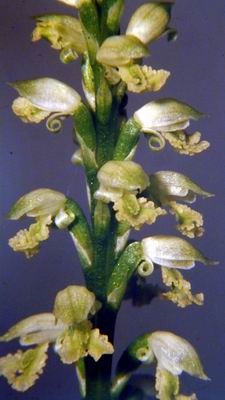
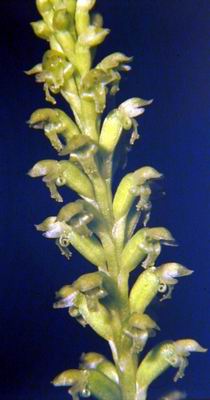
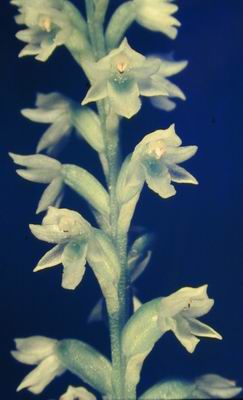
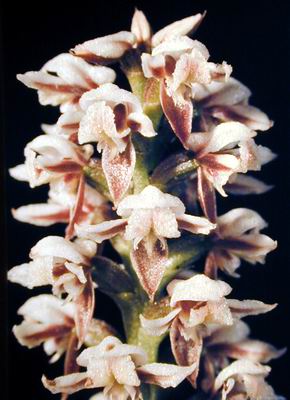
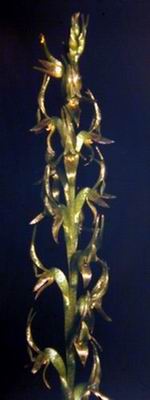
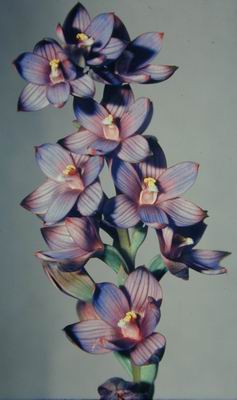
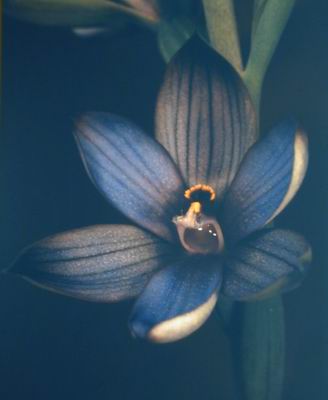
In 1871 Reichenbach named Prasophyllum brownii and Microtis brownii in
Brown's honour from specimens collected at King George's Sound by Brown in
1801. The latter has since been reduced to synonymy because of Brown's prior
name M. rara from a collection in South Australia in 1802. He was also honoured
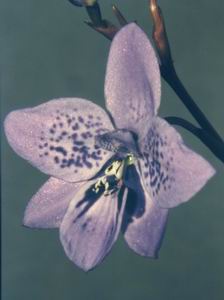
by Endlicher in 1871 with Caladenia brunonis (now Elythranthera brunonis)
collected by Von Huegel at the Swan River Colony (Perth) and at King George's
Sound (Albany) in November and December 1833.
Brown's work at King George's Sound in 1801 has proved to be extremely
thorough, since then just four terrestrials not recorded by him have been found
flowering in December. It is interesting to note that all of Brown's recordings
can still be seen flowering in December as they did 185 years ago.
JAMES DRUMMOND 1748-1863. Gardener, Botanical Collector.
Captain Stirling's colonizing party arrived at the Swan River on the
"Parmelia" in 1829. James Drummond one of the original colonists
became official gardener, and soon afterwards commenced botanical exploration
and collecting that was to span the next 15 years.
His expeditions ranged far and wide into what was then an inhospitable and
unrelenting land. He was in the forefront of settlers to visit remote areas,
south to Augusta, east to the Barren Mountains (Fitzgerald River National Park)
and north to the champion Bay (Geraldton) and the Murchison River and
north-east to the edge of the desert country (The Eremaean)
Drummond's collections were sent initially to Captain Mangles who visited
the Swan River in 1831 and later to John Lindley and Sir William J Hooker.
Lindley arranged disposal of duplicate collections that were studied by Stephan
Endlicher and Heinrich Reichenbach. Poor communication between European and
English researchers resulted in numerous species being named more than once;
this was later to cause great confusion as to the correct status of species.
Drummond's collections represented some 2000 species new to botanical science,
his contributions were easily the most important of the period.
It is difficult to speculate the hardship he endured when the only transport
was on foot or on horseback with initially only bush tracks and few datum
points in sparsely settled areas. This resulted in an inability to give precise
locations for most specimens, many of these are still known only by the type
collections.
Sir W J Hooker of "Kew" (The Royal Botanical Gardens) with the
receipt of one of his last collections (220 species) in 1848 from the northern
areas, stated that this was a fitting conclusion to a dedicated collector whose
love of a unique and beautiful native flora has 'never been matched before or
since. He played his part in the growth of the infant colony and was in the
forefront of the exploration of the landscape. Hooker commenting on a
consignment from the Barren Mountains stated that he had rarely seen so great a
number of fine and remarkable species arrive at one time from any country.
Ludwig Diels wrote: "He joined in every struggle the young country had to
fight to overcome the difficulties, but all his labours and bitter experiences
did not separate him from his favourite hobby, with rare devotion and real
enthusiasm he kept it up to the end".
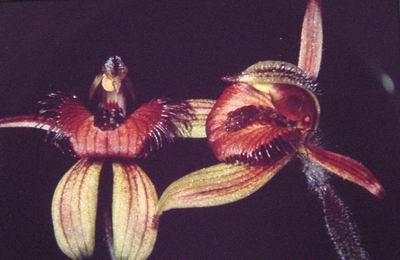
Caladania discoidea,
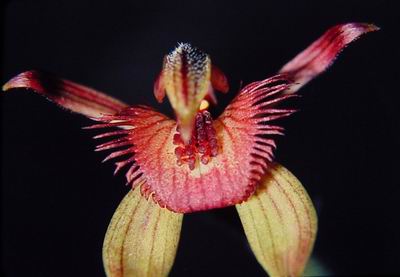
In 1846 the British Government recognized his contributions to botanical
science with a gratuity of two hundred pounds; he was further recognized by
some 100 species named in his honour.
Drummond's terrestrial orchid collections resulted in some 60 species being
named. Just 30 have survived botanical revisions.
Named by J Lindley 1840 vegetation Sketch Swan River Colony.
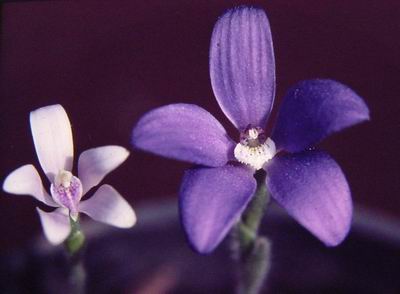
Caladania gemmata; (Now Cyanicula)
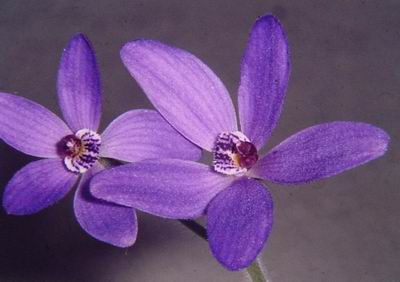
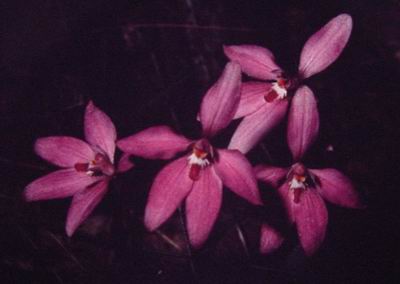
C. reptans;
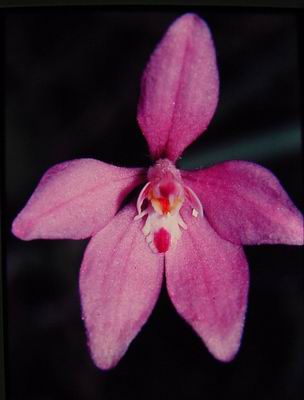
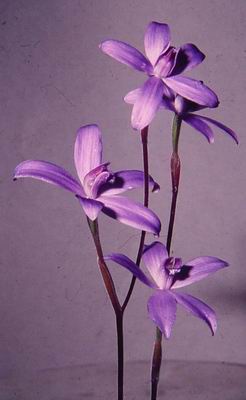
C. sericea;
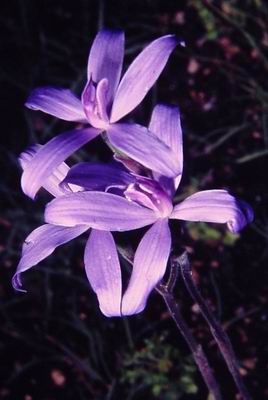
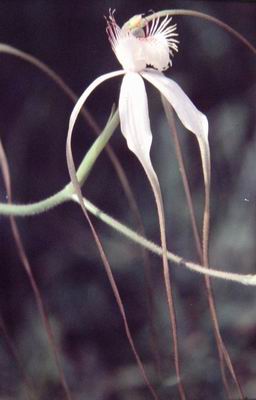
C. patersonii var longicauda;
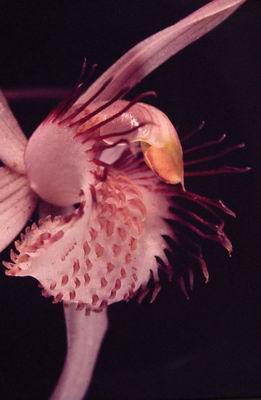
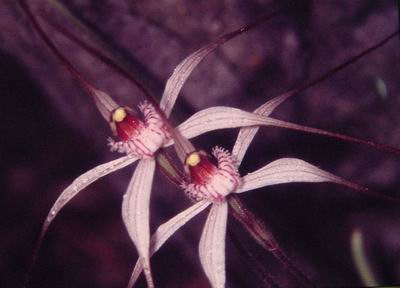
C. filamentosa var denticulata;
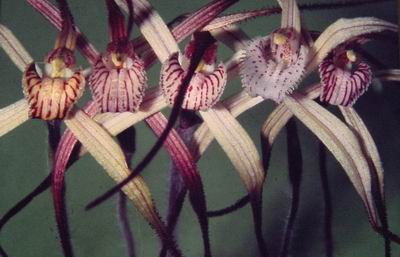
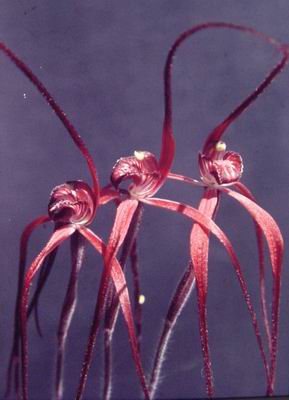 C. filamentosa var filifera
![]()
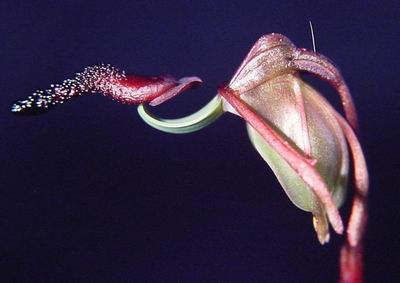 Paracaleana nigrita
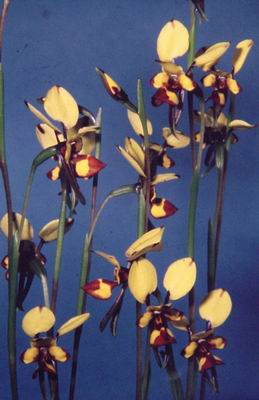
Diuris laxifolia
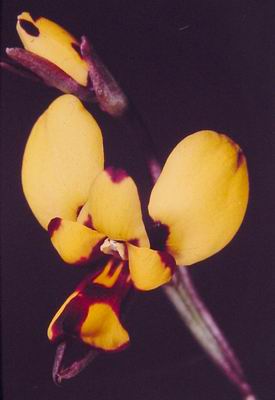
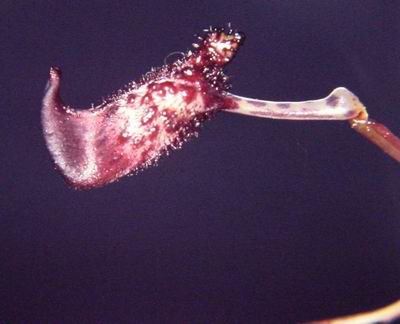
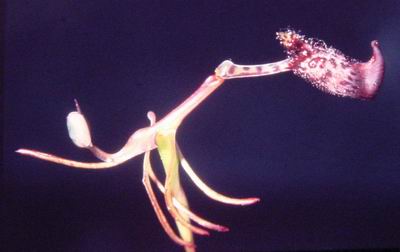 Drakaea elastica
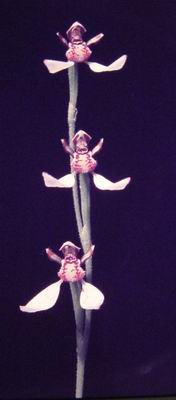 Eriochilus dilatata;
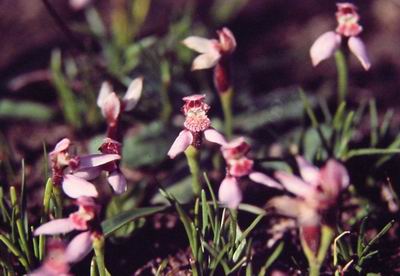
Eriochilus scaber
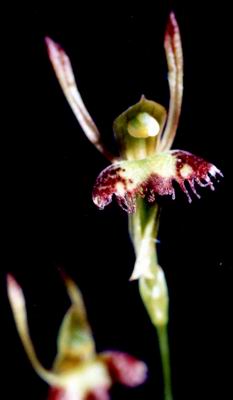
Leporella fimbriata
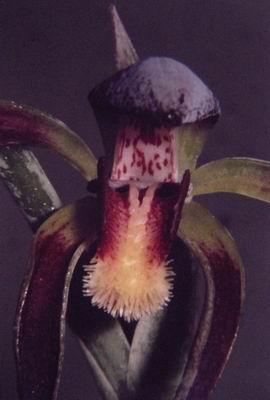
Lyperanthus serratus
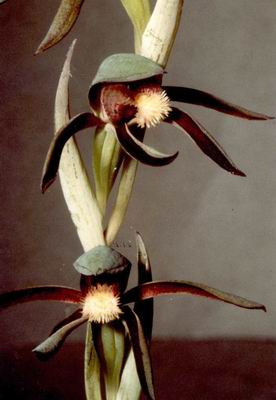
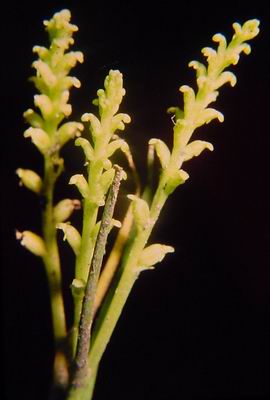
Microtis atrata
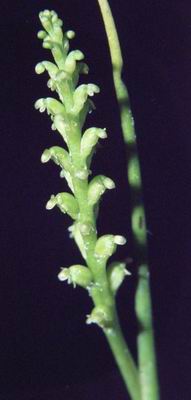
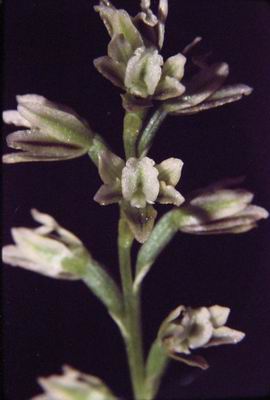 Prasophyllum ovale;
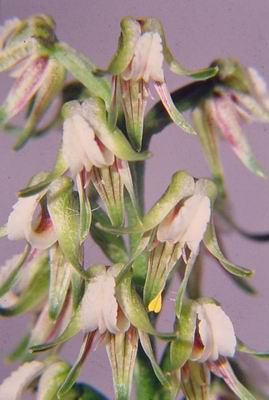
P. parvifolium;
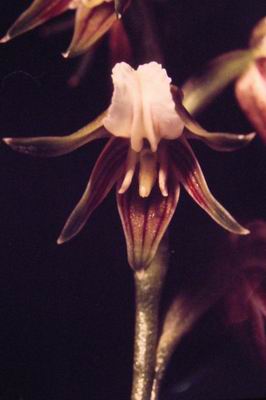
P. giganteum (No picture)
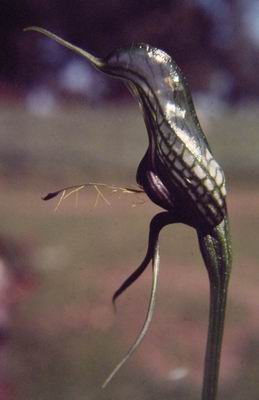 Pterostylis
barbata;
Pterostylis
barbata;
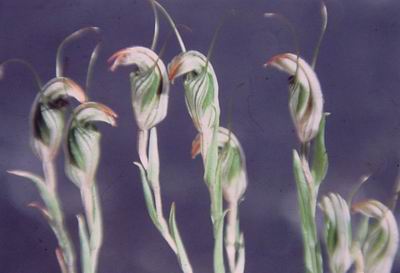
P. scabra var scabra
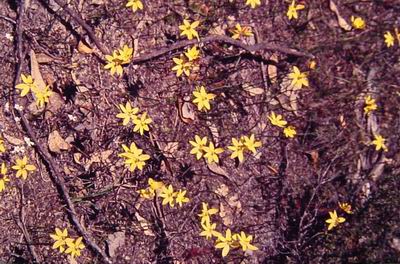
Thelymitra antennifera;
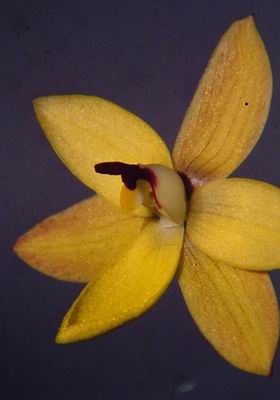
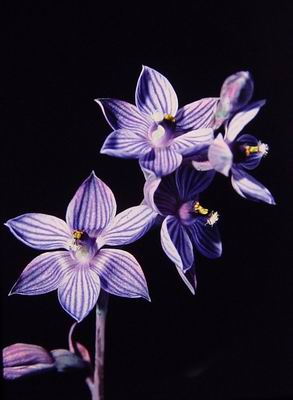
T. campanulata;
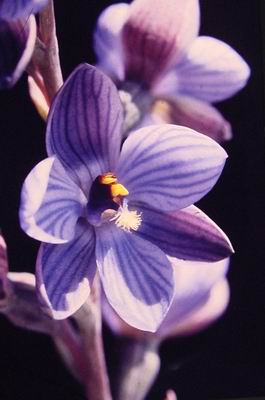
T. crinita.
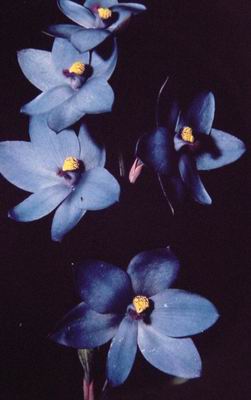
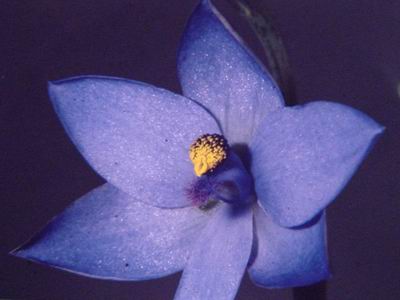
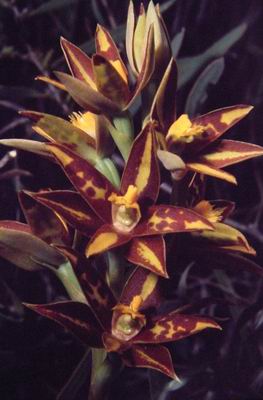
T. fuscolutea var stellata;
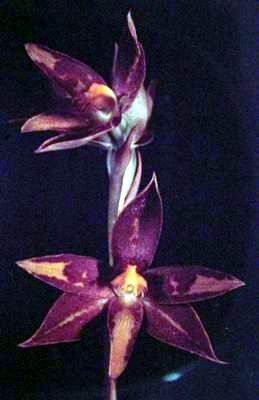
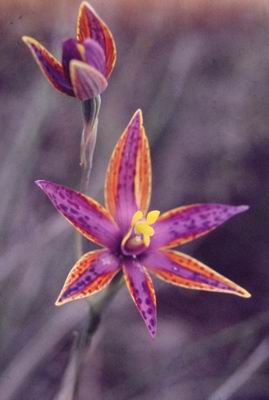
T. variegata;
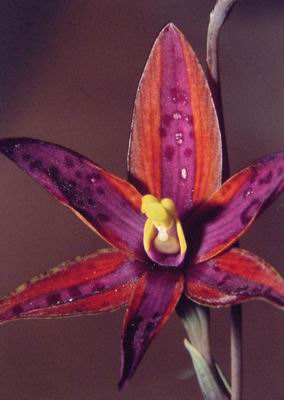
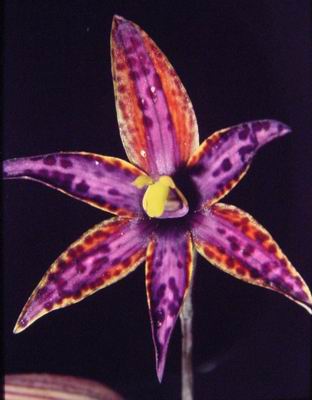
T. variegata;
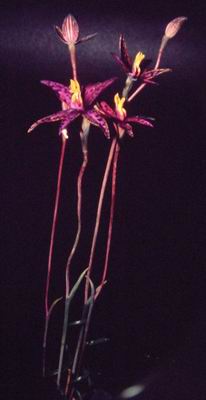
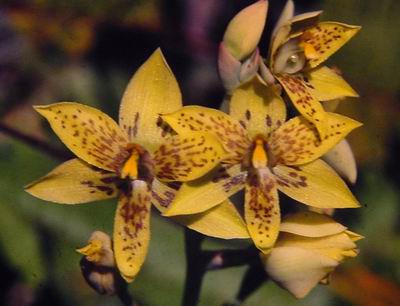 T. villosa;
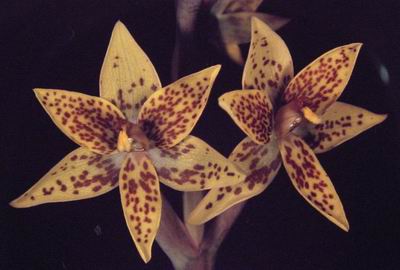
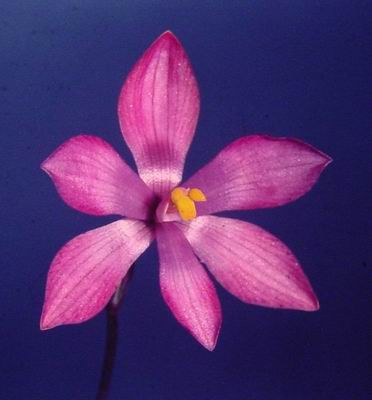 T. spiralis.
Spiculaea ciliata.
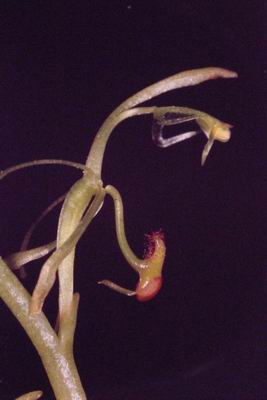
Named by Reichenbach, 1871, Additional Plants to Systematic Botanical
Science.
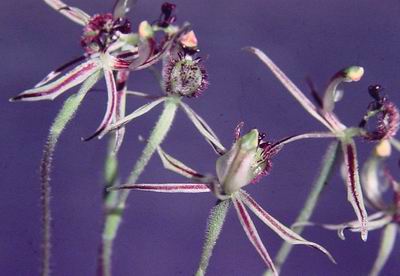
Caladenia barbarossa;
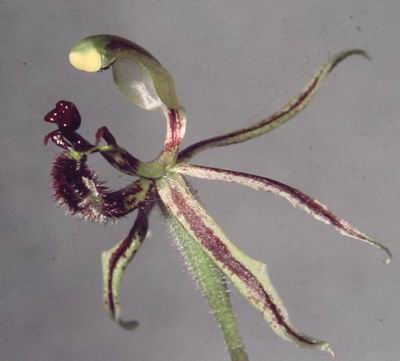
C. multiclavia;
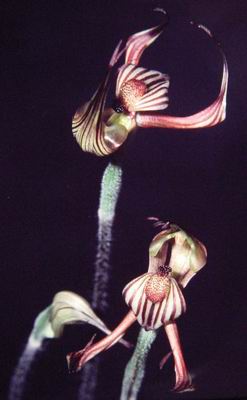
C. saccharata.
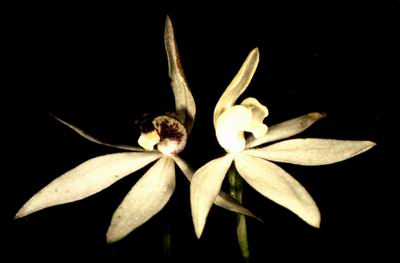
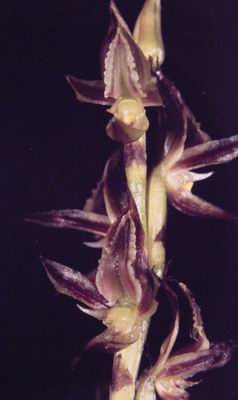 Prasophyllum drummundii;
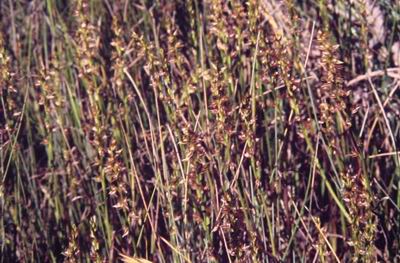
Prasophyllum fimbria;
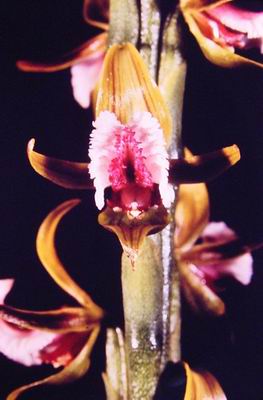
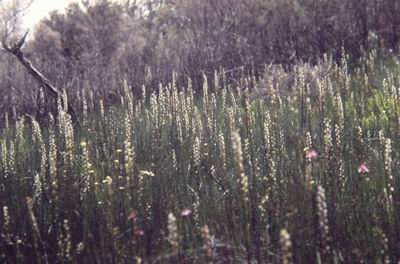
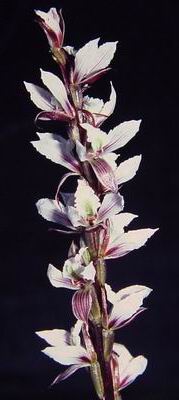
Prasophyllum hians;
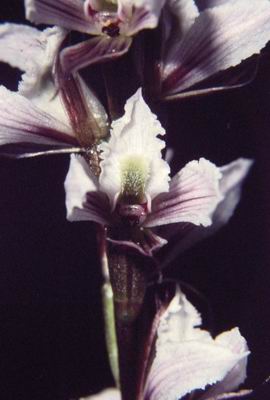
Prasophyllum ovals var triglochin; (No picture)
Named by Bentham, 1873, Flora Australiesis.
Caladenia drummondii;
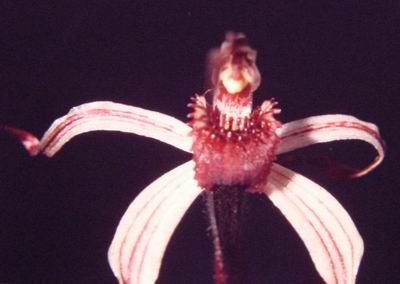
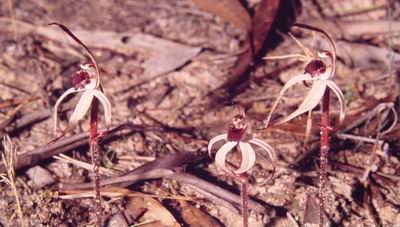
Pterostylis recurva.
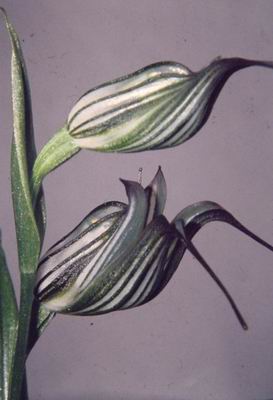
JOHN SEPTIMUS ROE l797-l878 Surveyor Explorer and Botanical Collector.
John Septimus Roe was another of the original colonists and was later to
become Surveyor General. He became the principal explorer of the colony.
Possibly his greatest exploratory achievement was in 1848 when under the orders
of Governor Fitzgerald, he was instructed to explore from Cape Riche to the
Russell Ranges (east of Esperance and named by John Eyre in 1841). He was to
look for coal deposits, permanent fresh water and grazing land. Roe had
previously explored the coastline by sea with Captain Phillip King in 1819, he
had noted mountain peaks inland and was to name most of these.
Fitzgerald Peaks (after the Governor), Mount Charles
(now Peak Charles), Mount Eleanor, Mount Ridley, Mount
Howick, Mount Ney and Mount Merrivale, Stokes Inlet,
Lort River, Young River, Phillips River, Fitzgerald
River, Mount Desmond, Eyre Range, Mount Bland, Mount
Madden, Culham Inlet and the Bremer Range.
During this and other expeditions, he collected botanical specimens that
were sent to Sir W J Hooker and Ferdinand Von Mueller. Ten species were named
in his honour, one being an orchid.
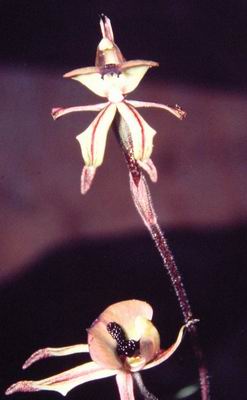
Bentharri 1873, Flora Australiensis. Caladenia roei.
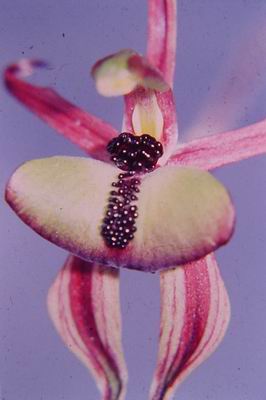
Caladenia roei.
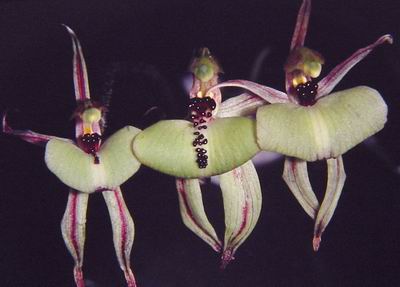
CAPT JAMES MANGLES R.N. 1786-1867. Naturalist and Patron of Botanical
Collecting.
Capt. Mangles arrived at the Swan River at the invitation of his cousin Lady
Stirling (the Governors wife) in 1831. Assisted by James Drummond and other
settlers; G F Moore, T. Carroll, Capt. Meares and Mrs. Bull, he made extensive
collections of seeds and specimens of the flora in an area approximating the
Perth Metropolitan Region. Through Lady Stirling he arranged for these and
other collections to be forwarded to England in the future. Georgiana Molloy of
Augusta was later to forward extensive collections to Capt. Mangles.
Dried specimens particularly from Drummond were forwarded onto Lindley and
some found their way to European Herbaria. Seeds and growing material were
grown by Mangles in his private gardens and by his brother Robert who was a
horticulturist. Some type specimens were grown in this way, with surplus
material sent to other English gardens.
Orchid collections reaching Lindley were credited to the name of the sender.
BARON VON HUEGEL 1796-1870. Botanical Collector.
Von Huegel visited the Swan River Colony in 1833 during November-December.
He botanised around the area we now know as Perth, assisted by James Drummond
and other settlers. He later proceeded to King George's Sound by ship and made
further collections. He had some very pertinent criticisms about the British
Governments lack of support to the struggling colony. His collections were
written up by Endlicher and others and published in "Enumeratio
Plantarum" in 1837 wherein he was honoured by 16 species bearing his
name. This work included three of his orchid collections:
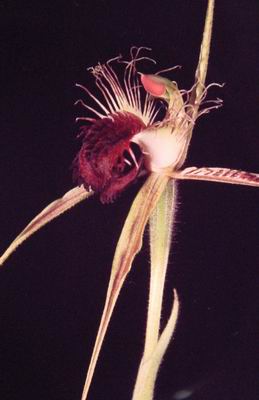
Caladenia huegelii. H.G. Reichb. At Swan River. Nov 1833.
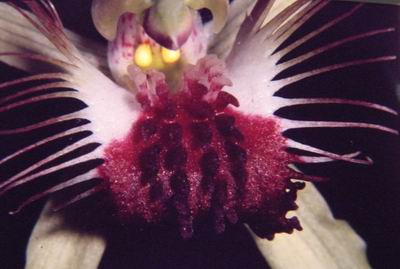
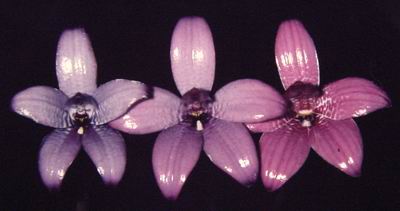
Elythranthera brunosis. (Endl~ A. S. George At King
George's Sound & Swan River, 1833
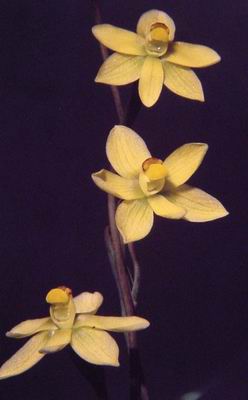
Thelymitra flexuosa. (EndL) At King George's Sound Dec, 1833.
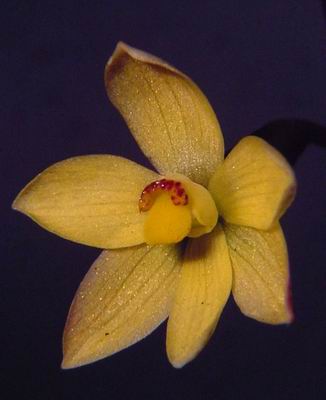
DR ALEXANDER COLLIE. Surgeon, Magistrate and Amateur Botanist.
Dr Collie was another of the original colonists and was later stationed at
King George's Sound where he remained until 1835. He took a keen interest in
the Aborigines, learning their language and customs, and showed compassion and
concern for their welfare. His botanical collections were sent to Lindley
resulting in two orchids being named:
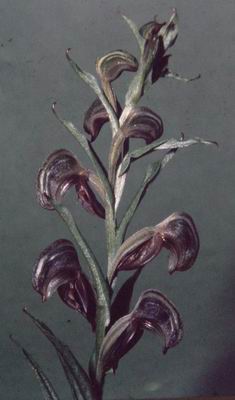
* Pterostylis vittata var vittata Lindley
1840. Vegetation Sketch of Swan River Colon
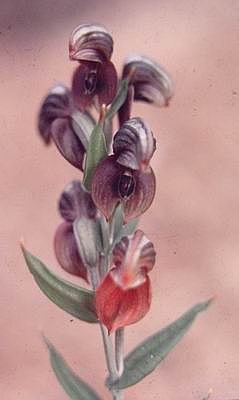
* Caladenia marginata Lindley 1840
Vegetation Sketch of Swan River Colony.ex King George's Sound
and Collie.
GEORGIANA MOLLOY 1805-1843. Botanical Collector.
Mrs. Molloy was the wife of Capt Molloy leader of the first settlers at Augusta
in 1830. Georgiana, a cultured and well educated woman had a love for garden
flowers and had brought seeds, bulbs and plants from England. She quickly
became enchanted with the local native flora and was fascinated by their
strange and different beauty.
Lady Stirling arranged for Mrs. Molloy to collect seeds and specimens to
forward onto Capt. Mangles. She maintained a regular correspondence with him
sending specimens over a period of seven years. Mangles responded by sending
her regular supplies of "creature comforts" that were not readily
available in the colony. Although not very robust she was to bear seven
children and under tragic circumstances her only son was drowned as a
child.
Mrs. Molloy extended her hospitality to all who came to Augusta including James
Drummond and Ludwig Preiss and assisted them with her extensive knowledge of
the local flora.
George Bentham mentioned in "Flora Australiensis" that she made a
major contribution to botanical science. After the family moved to the Vasse
her health deteriorated. She wrote to Mangles in her last letter "I have
sent you everything worth sending".
George Hailes, prominent English Gardener wrote of her "not one in ten
thousand who go to distant lands has done what she did for her native
country".
Most of Georgiana Molloy's orchid collections were reduced to synonymy. She
shared with James Drummond.
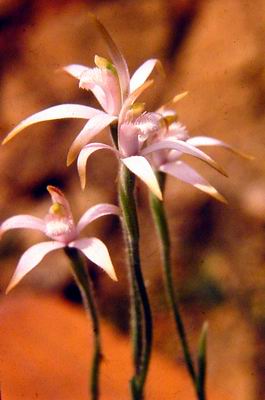
Caladenia hirta Lindley Vasse River Mrs. Molloy
JORANN AUGUSTUS LUDWIG FREISS 1811-1883. Botanist and Biologist.
Ludwig Preiss was financed by the Austrian Governments to collect plants and
biological specimens. He spent three years 1839-1841 at the Swan River Colony
and collected some 2700 specimens, being assisted by the settlers, particularly
James Drummond and Georgiana Molloy.
Most of his biological specimens were purchased from the settlers and their
children. Animal and bird skins, eggs, seashells etc. There was considerable
criticism from the settlers that foreign governments were taking advantage of
the colony's natural flora and fauna and their own government was not
interested.
Preiss aware of the settlers resentment, sought to become a British subject
and offered to the Governor to make all his collections available, however this
was refused.
Most of his collections came from the well settled areas and he was able to
give meticulous descriptions, locations and habitats, mostly lacking from other
collections at that time.
One very important result of Preiss's visit was that he influenced Ferdinand
Von Mueller to come to Australia in 1852
.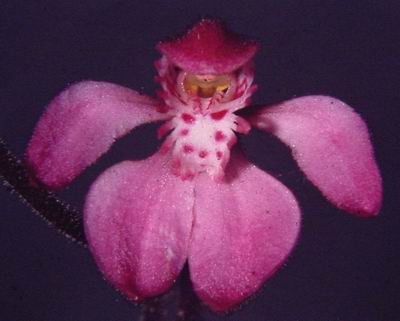
Caladenia nana En dl.
Mt Clarence, Preiss, Oct. 5, 1840.
His botanical collections were written up in "Planta
Preissieanae"by J.G.C. Lehmann 1844-1847 wherein he was honoured by 40
species being named after him.
As most of Preiss 's orchid collections were duplicates of Drummond's just
three have survived reduction to synonymy.
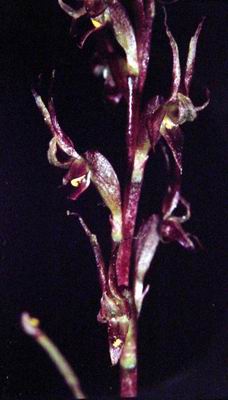
Prasophylum macrostayum R.Br. var ringens Reich. F. 1871
York, Preiss
Acianthus reniformie R. Br. var hueglii Endl. Rottnest
Island Preiss Aug 22, 1839.
GEORGE MAXWELL 1805-1879. Botanical Collector and Naturalist.
George Maxwell arrived at King George's Sound in 1840 and did extensive
collecting work around the Sound in the Stirlings and east to the Barren
Mountains. On at least two occasions he botanised with James Drummond.
 To provide income for his expeditions he established a nature
and curios stall on the shipping jetty and also gave guided tours for a fee. He
later became a supplier of sandalwood Santalum spicatum, even he kept up
his botanising until 1863.
To provide income for his expeditions he established a nature
and curios stall on the shipping jetty and also gave guided tours for a fee. He
later became a supplier of sandalwood Santalum spicatum, even he kept up
his botanising until 1863.
Most of his specimens went to Mueller however some are lodged at Kew and the
British Museum of Natural History.
Ten species were named in his honour though only one orchid was named from
his collections:
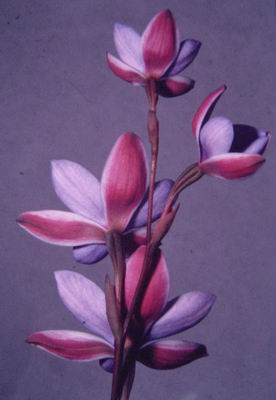
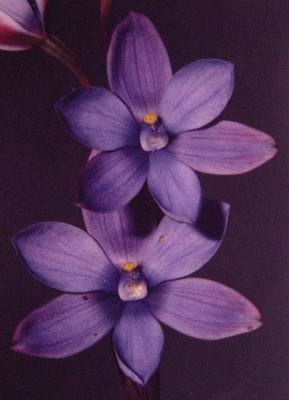
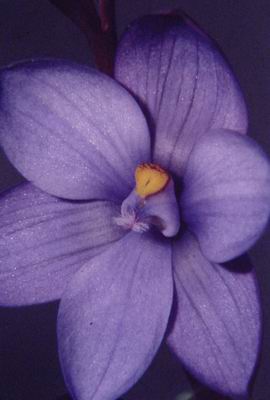
Thelymitra cornicina H.G. Reichb.King
George's Sound, Maxwell
DR WILLIAM HENREY HARVEY 1811-1866. Professor of Botany, Keeper of Herbarium
Dublin.
Dr Harvey visited King George's Sound in 1854 and spent eight months in the
colony mostly collecting marine plants, of which he was a world authority.
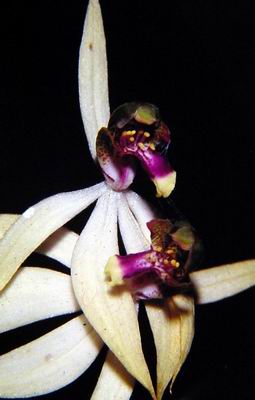
He had one orchid named:
Caladenia aphylla Benth. Flora Australiensis 1873 King George's
Sound, Harvey
AUGUSTUS FREDRICK OLDFIELD 1820-1887. Botanist and Zoologist
Oldfield made extensive collections in Tasmania during the mid nineteenth
century. He collected in W.A. up to the 1860's and his collections went to the
Melbourne botanical gardens and to Kew gardens.
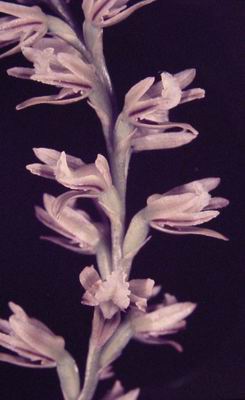
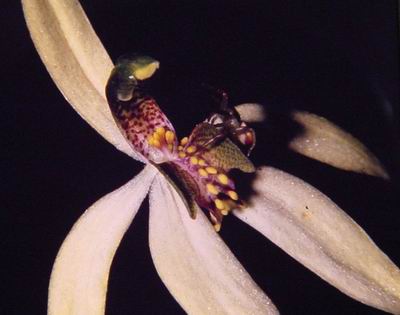
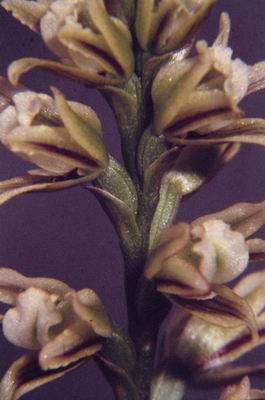
Thirteen species were named in his honour he had one orchid named:
Prasophyllum cyphochilum Benth.
Upper Kalgan, Oldfield.
BARON FERDINAND VON MUELLER 1825-1896. Government Botanist Victoria
1857-1873.
On the recommendation of Sir W J Hooker, Von Mueller was appointed as
Government Botanist in Victoria in 1857. His prodigious enthusiasm and
willingness to make extensive field excursions resulted in his becoming the
foremost authority on Australian flora for those times.
As a member of A C Gregory's exploration to the Kimberleys in 1856 he made
extensive collections and visited W.A. again in 1867, when he influenced
numerous settlers to collect for him from as far afield as the Murchison River
to Israelite Bay.
Ferdinand Von Mueller had intended to write up and publish the Flora of
Australia and was most disappointed when Bentham was chosen for this work.
However he co-operated willingly with Bentham. Some authorities consider that
he should have been regarded as co-author of "Flora Australiensis"
His major contribution to the knowledge of flora in Australia was recognized
in his award of K.C.M.G. in 1879.
He collected and named two orchids in W.A.
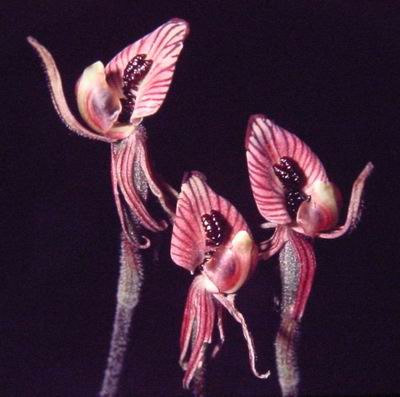
Caladenia cairnsiana F. Muell.
collected at Stirling Range
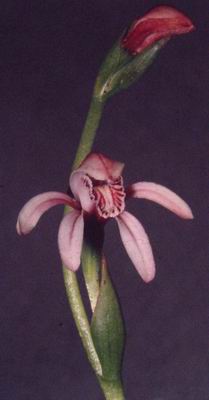
Lyperanthus forrestii F Muell. 1882 Near Stirling Range, J. Forrest
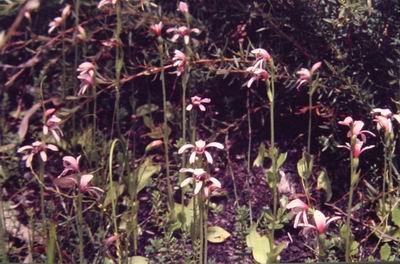
ROBERT DAVID FITZGERALD. 1830-1892. Deputy Surveyor General NSW.
Robert Fitzgerald did early research into self pollination and pollinating
mechanisms with terrestrial orchids. He did pioneering work in NSW particularly
along the Hawkesbury River and in the environs of Sydney He visited W.A. in
1881 and did field work around Perth to Bunbury and to Albany. His collections
resulted in the naming of 12 terrestrials, 5 of these have since been reduced
to synonyms.
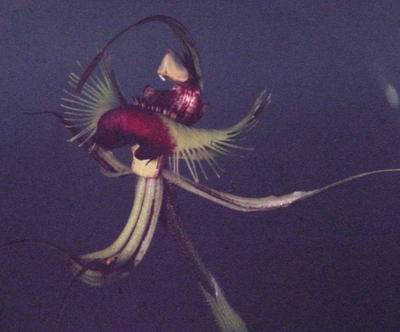
Caladenia lobata Fitzg. 1882. Upper Hay River
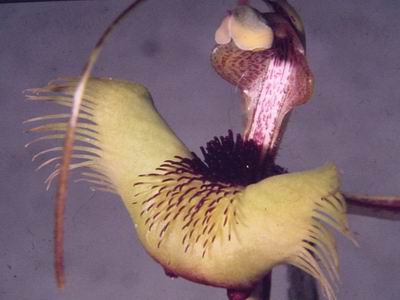
All of his orchid collections were published in Australian Orchids
1875-1894. This publication is now a collector's piece. The quality of his
artistic plates, accurate to the finest detail, and with clear concise text is
considered to be amongst the finest orchid work that has ever appeared.
His named W.A. orchids are all published in "Gardners Chronicle".
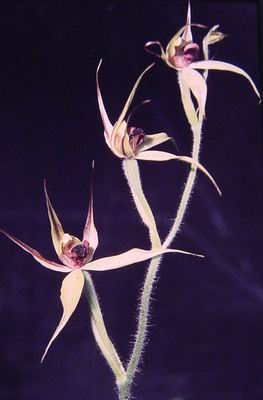
Caladenia macrostylis Fitzg. 1882. Upper Hay River
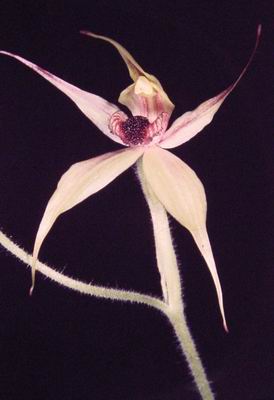
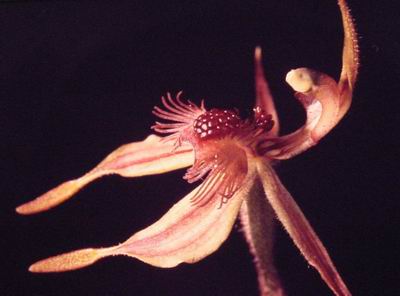
C. plicata Fitzg. 1882 Wharberton, St Werber gs) Upper
Hay River
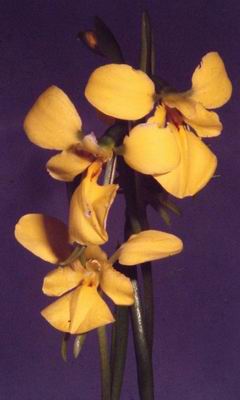
Diuris laevis Fitzg. 1882 Wilsons Inlet, Sept 1881
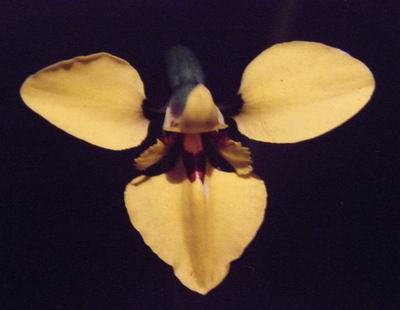
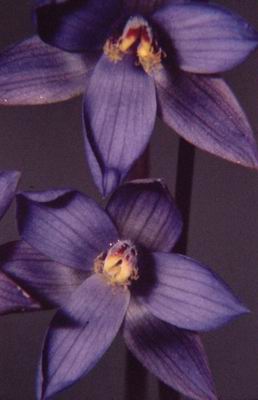
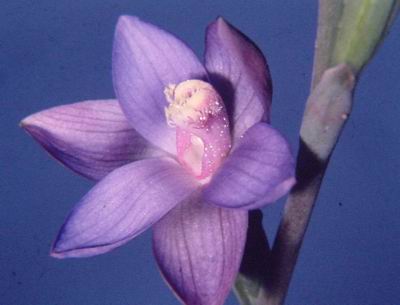
Thelymitra mucida Fitzg. 1882 Wilsons Inlet, Sept 1881
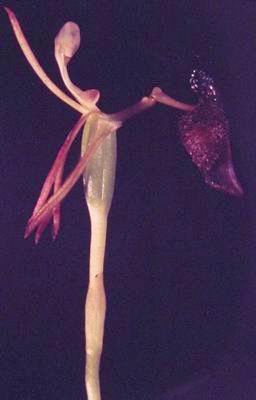
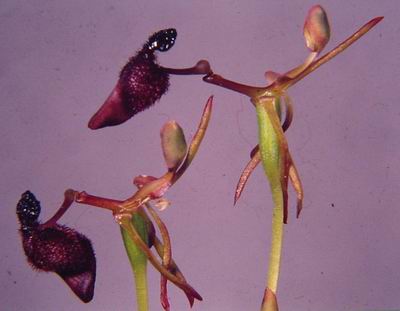
Drakea glyptodon Fitzg. 1882 Bunbury, Sept 1881

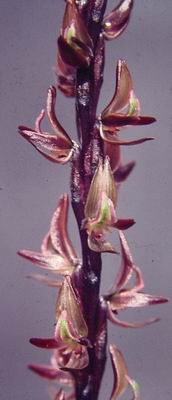
Prasophyllum triangulare Fitzg. 1882 Albany, Oct 1881
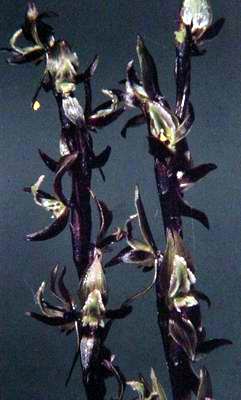
THEODORE GOADBY 1862-1944. Orchidologist.
Arrived in W.A. in 1895 and became a member of the garrison at the Albany
Fort. His field work tended to specialize in orchids from Albany to Perth and
into the Wheatbelt.
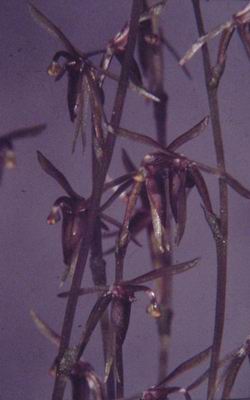
Acianthus tenuissimus Nicholls et Goadby Sept-Oct 1933
ex E.T.Goadby Bayswater Perth Sept-Oct 1932.
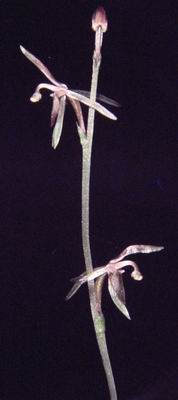
His interest spanned nearly 50 years and numerous orchid specimens are under
his name at the W.A. Herbarium. He also sent specimens to Dr Rogers in South
Australia who, in recognizing his contributions to knowledge named
Goadbyella gracilis in his honour. It is ironical that this genus was
considered to be an aberrant hybrid and therefore was subsequently dismissed as
a valid taxon. However the literature and herbarium sheets will preserve and
recognize his more than half a life time of dedicated effort.
R.S. Rogers records Goadby specimens in naming:
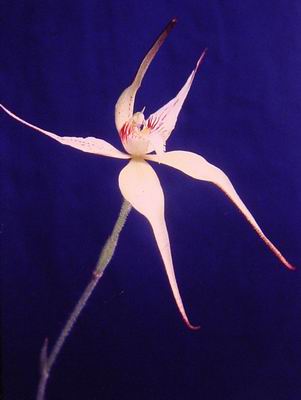
Caladenia triangularis Goadby, Highbury Sept 1924
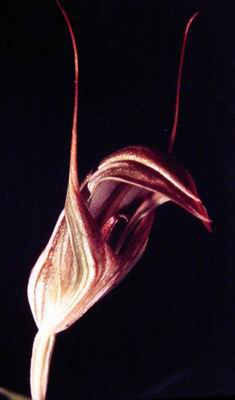 Pterostylis rogersii Goadby, July 1928-29
P. scabra var robusta Goadby, Perth, Fremantle, July 1927(No picture)
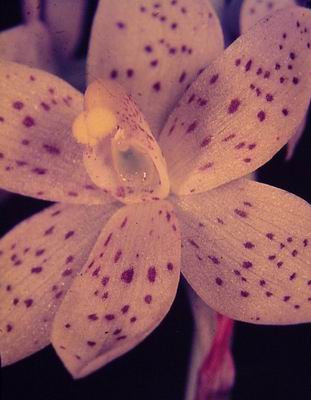
Thelymitra sargentii Goadby, Dalwallinu, Oct 1929
CECIL ROLLO PAYTON ANDREWS 1870-1957. Principal, Teachers Training College
Director of Education.
Cecil Andrews was a keen botanist and collected mainly in the Perth - York -
Northam areas and visited Albany, Stirling Ranges and the Barrens; often with
his friend and associate, Oswald Sargent; his interest spanned some fifty
years. Many of his specimens are lodged at the W.A. Herbarium.
His work has been honoured by 7 species of flora bearing his name.
He was the first West Australian to name an orchid and published two in the
Journals of the W.A. Historical Society.
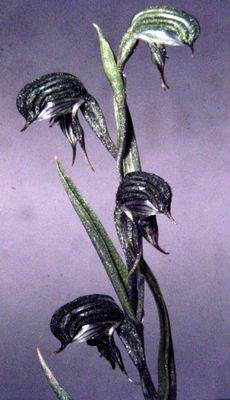
Pterostylis sargentii C Andrews 1905York, O.H. Sargent, July-Aug 190
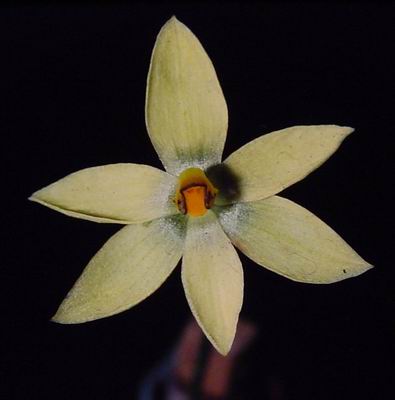
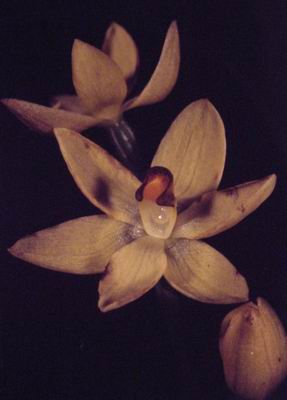
Thelymitra psammophila C Andrews 1905
Upper Kalgan River & Stirling Range, Andrews, Oct 1903.
OSWALD HEWLETT SARGENT 1880-1952. Pharmacist and Orchidologist
Did extensive field work in the York area and elsewhere. Was the first West
Australian to publish notes on pollination; from observations of wasps
pollinating C. barbarossa. Many of his specimens are lodged at the W.A.
Herbarium.
Five species were named after him, three were orchid
Pterostylis sargentii C. Andrews 1905 York, O.H. Sargent, July-Aug,
1905
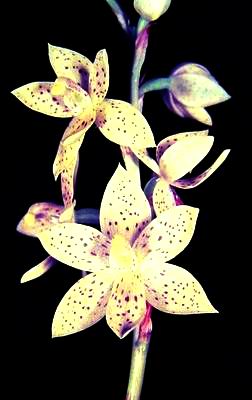
Thelymitra sargentii R.S. Rogers 1930 Bruce Rock O.H.Sargent Oct 1929
Prasophyllum sargentii (W.H.Nicholl5) A.S. George Beverley, Nicholls,
Sept 1948 (No picture)
One Species named
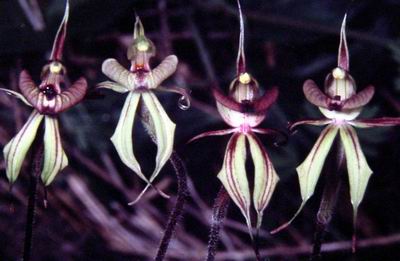
Caladenia doutchiae Sargent 1926
Datatine near Katanning, Miss L.Doutch
FREDRICH LUDWIG EMIL DIELS 1874-1945. Director of Berlin Botanic Gardens
Ludwig Diels together with G C Pritzel (Teacher of Botany) traveled widely
in W.A. during 1900-1901. Their most extensive collections of flora totaled
some 5700 specimens. These collections were jointly written up in Fragmenta
Photographiae Australiae Ocidentalis, a major authority on our flora. This work
named one orchid.
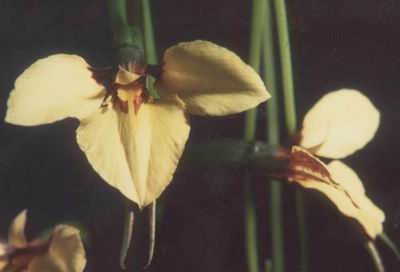
Diuris purdiei Diels 1903 Cannington, A. Purdie.
KARL DOMIN 1882-1953. Professor of Botany Prague.
Professor Domin described and wrote about many W.A. plants. He named two of
our orchids.
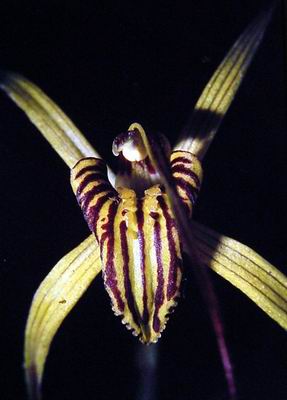
Caladenia filamentosa var caesarea Domin 1912 Bridgetown, Kojonup,
Slab Hut
Gulley, Dorrien Smith, 1909
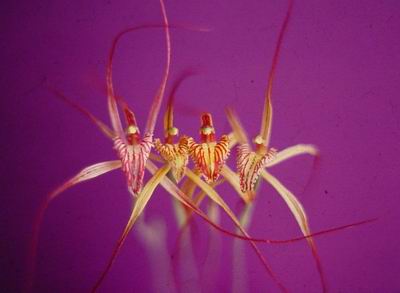
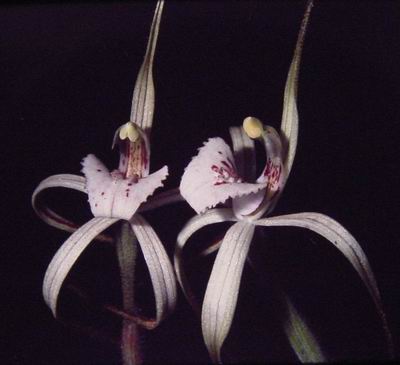
C. filamentosa var dorrienji Domin 1912 Bridgetown,
Kojonup, Slab Hut Gulley, Dorrien Smith 1909t
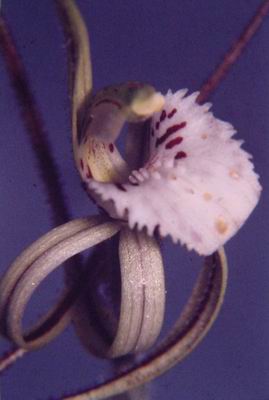
DR RICHARD SANDERS ROGERS 1862-1942. Surgeon and Orchidologist
Dr Rogers was one of a number of orchidologists who surfaced in the late 1800's
in Australia, after British and European interest in taxonomy had waned. His
contributions to knowledge and research was evident in numerous papers
published in the Royal Societies of Australia and overseas. These were
recognized by him being awarded his Doctorate of Science at Adelaide University
in 1936. His thesis on orchids was acclaimed by authorities in England and
elsewhere.
After correspondence with a number of W.A. enthusiasts, he and his wife
Jean, visited in 1919 and did extensive fieldwork. His total of 79 orchid
species named Australia wide has not been surpassed and has only been
approached by the Reverend Rupp.
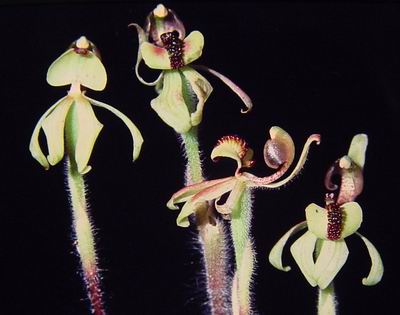
Bryce Macintyre. Caladenia bryceana Rogers 1914 ~ River, Sept
1914.
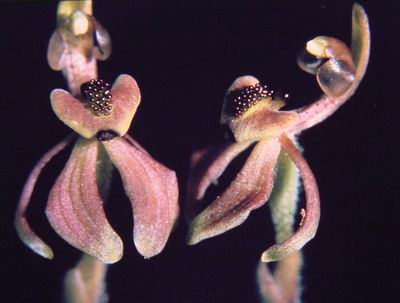
He named and described seventeen species from W.A. all published in the
Trans Royal Soc. of S. Aust. The most uniquely important of these was "The
Underground Orchid" Rhizanthella gardneri, the subject of
considerable research over recent years, initially funded by a grant from the
World Wildlife Fund.
His names for W.A. orchids include:
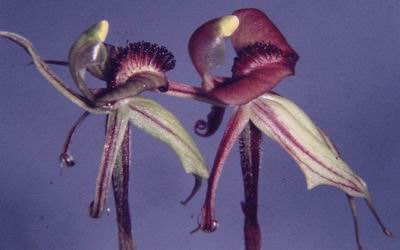
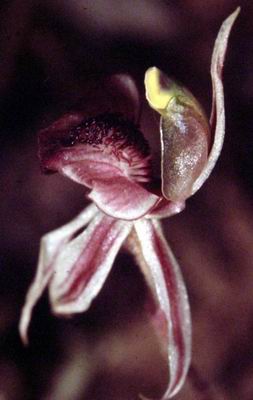
C. cristata Rogers 1923 F. Simpson, Miling, Sept 1923.
C. lavandulacea Rogers 1927 Miss W. Deadman, Beverley, Sept 1926.(No
picture)
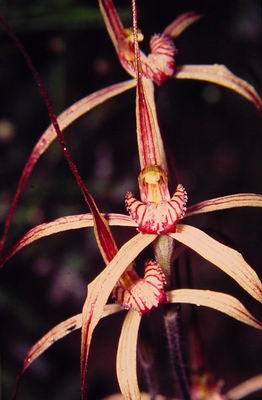
C. radialis Rogers 1927 F. Stoward, Beverley, 13 Sept 1927.
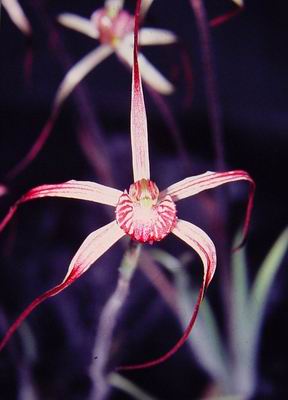
C. radialis
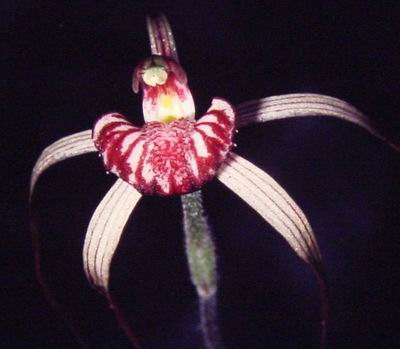
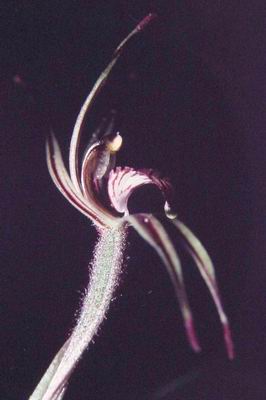
H. Ising, Beverley, 1 Sept 1913.
C. sigmoidea Rogers 1938 L. Horbury, Kumari, 25 Aug 1937.
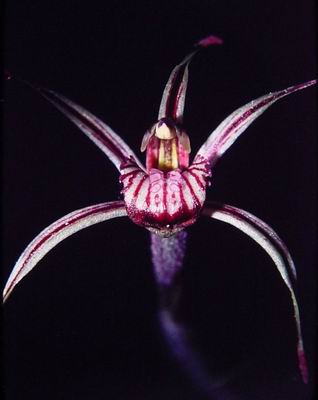
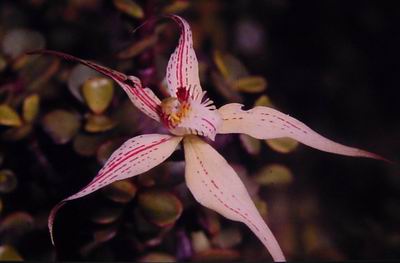
C. triangularis Rogers 1927 E.T. Goadby, Highbury, Sept 1924
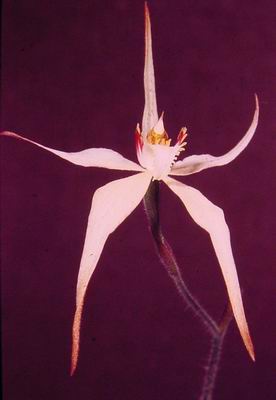
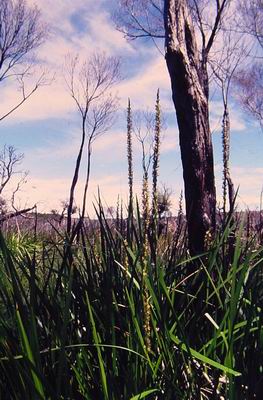
Prasophyllum regium Rogers 1918 R. Pulliene, Manjimup,
Dec 1917
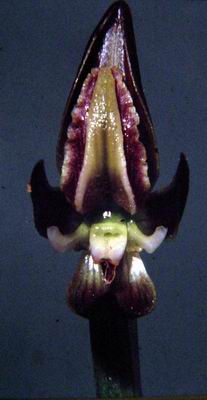
Prasophyllum regium Rogers 1918 R. Pulliene, Manjimup, Dec 1917
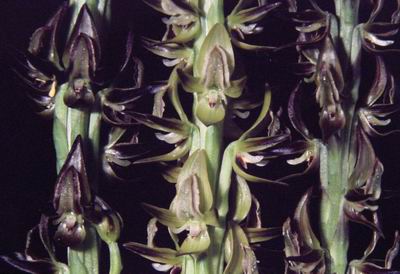
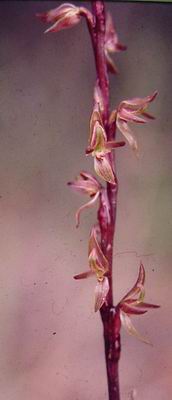
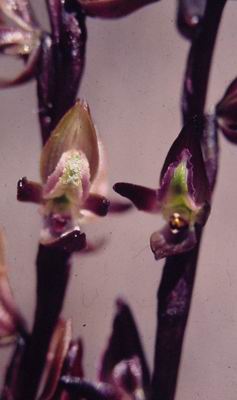
P.lanceolatum Rogers 1920 Johnson, Albany, 25 Sept 1919. Mrs W.E.
Cooke, Muresk, 4 Sept 1907.
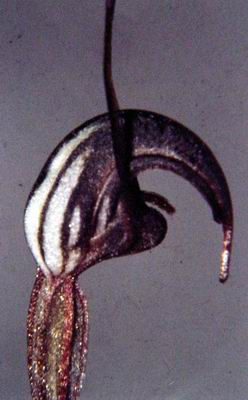
Pterostylis allantoidea Rogers 1938 L. Horbury, Kumari, Aug 1937.
P. scabra var robusta Rogers 1920 E.T. Goadby, Perth, July 1927. E.T.
Goadby, Swanbourne, July 1927.(No picture)
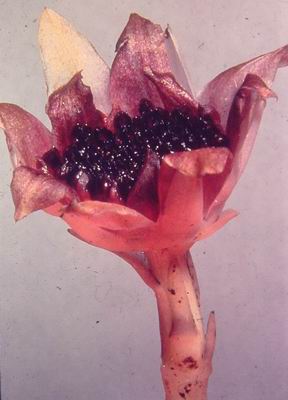
Rhizanthella gardneri Rogers 1928 J. Trott, Corrigin, 23 May 1928.
J. Plant, Shackleton, June 1928.
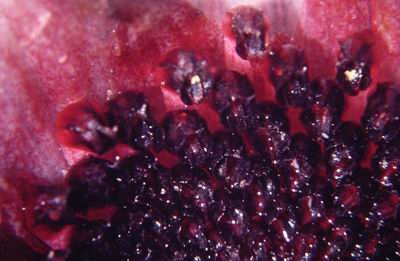
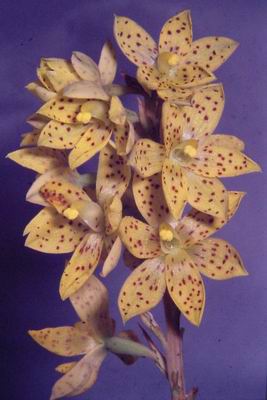
Thelymitra sargentii Rogers 1930 O.H. Sargent, Bencubbin, Oct 1924.
R.E. Edmonson, Bencubbin. Oct 1929. B.T. Goadby, Dalwallinu, Oct 1929.
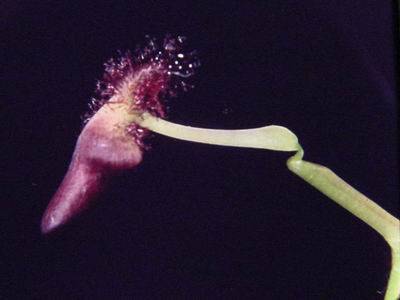
Dryakaea jeanensis 1920 Jean Rogers, Ravenswood, Sept 1919.
EDITH COLEMAN, Orchidologist
Edith Coleman continued the research on pollination of Australian orchids
commenced by Robert Fitzgerald during the 1880's and was involved with O.H.
Sargent who was doing similar work in W.A. The results of this work were
published in the "Victoria Naturalist" 1927-1934, in thirteen papers.
Her pioneering work on pollination made her the first of her sex to publish
results of this type of research. She was also the first woman to name and
describe orchids in Australia.
After corresponding with enthusiasts she visited W.A. in 1928, doing extensive
fieldwork with their assistance. This resulted in the naming of four W.A.
terrestrials all published in the 'Victoria Naturalist".
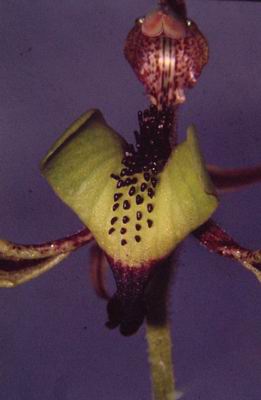
Caladenia integra E. Coleman 1933 Miss R Sandilands, Tunney
Mr Rowe, Kendenup, Sept 1930/31/32
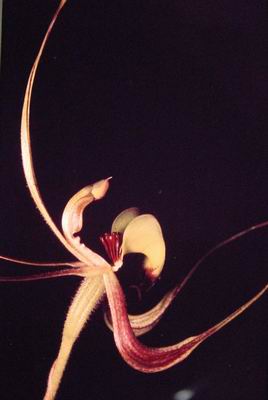
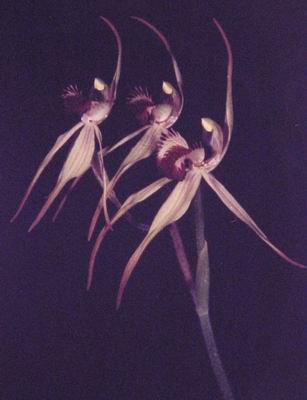
C. longiclavata var longiclavata E. Coleman 1930, Boyup Brook,
Busselton,
Donneybrook Sept 1928/29/30.
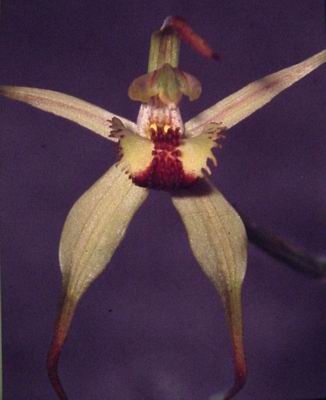
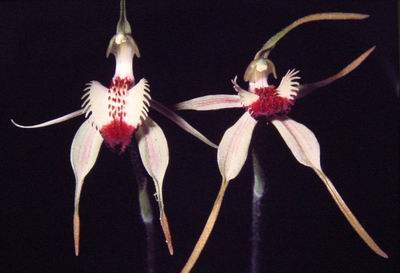
C. longiclavata var rhomboidiformis E.Colemam 1929, Boyup Brook,
Busselton, Donnybrook, Sept 1928/29/30.
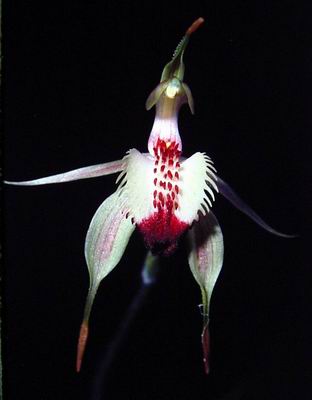
Pterostylis rogersii 1929 E. Coleman, Miss J. Banks, Mr. E. Bryant B.T.
Goadby Bunbury, Collie, Busselton, June-July 1928/29.
WILLIAM NICHOLLS. Amateur Orchidologist.
With only a primary school education he taught himself enough botanical Latin
and art to name and describe numerous Australian orchids.
William Nicholls life interest in our orchids reflected a dedication and
singleness of purpose that was quite unique for his time. His magnum opus,
Orchids of Australia , remains the most comprehensive reference available.
He visited W.A. in 1946 and 1948 and assisted by local enthusiasts did
extensive field work resulting in describing and naming 13 new species. Two of
these have subsequently been reduced to synonyms.
All were published in the "Victorian Naturalist".
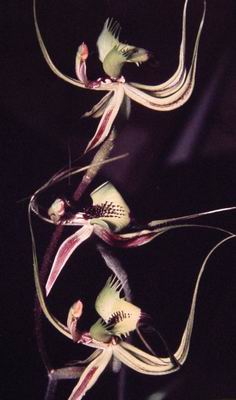
Caladenia dilatata var falcate Nicholls. Kojonup, Sept26, 1948.
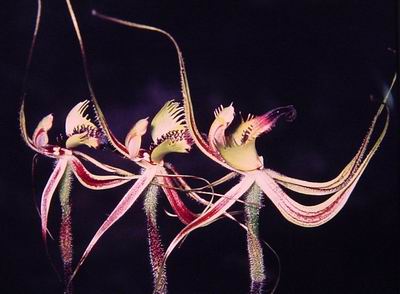
Caladenia dilatata var falcate
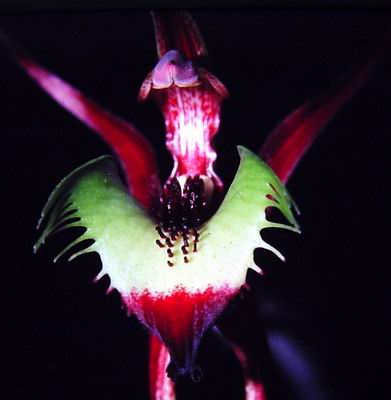
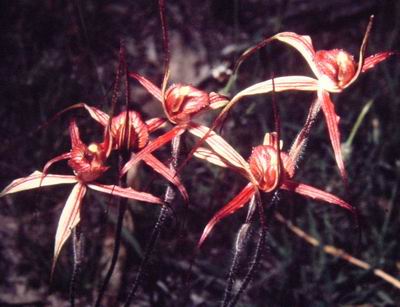
C. ericksonae Nicholls. Mrs R Erickson, Bolgart, Sept 27, 1949.
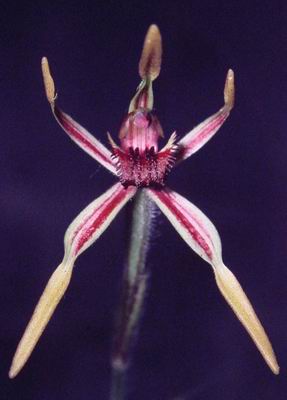
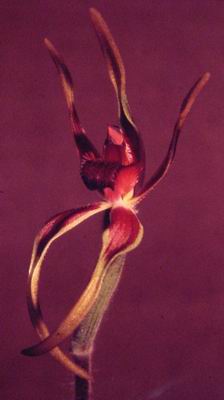
C.longiclavata var magniclavata Nicholls, Lesmurdie, Sept 26, 1948.
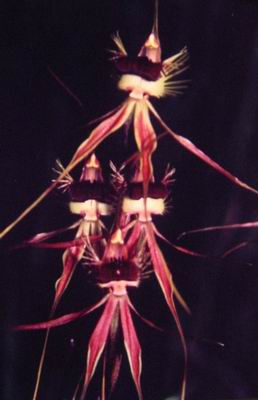
C. radiata Nicholls. Yarloop. Oct 9, 1948.
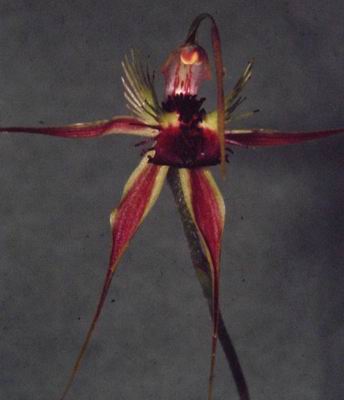
C. radiata
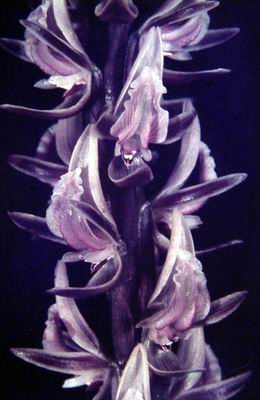
Prasophyllum grimwadeanum Nicholls. Middleton Beach, Oct 1946.
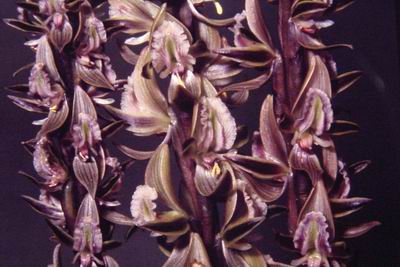
Prasophyllum grimwadeanum

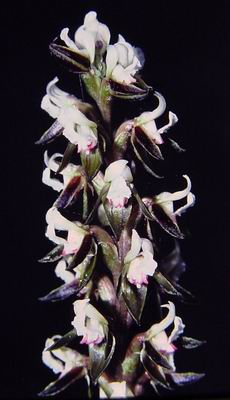
P. sargentii Nicholls. July/August 1949.
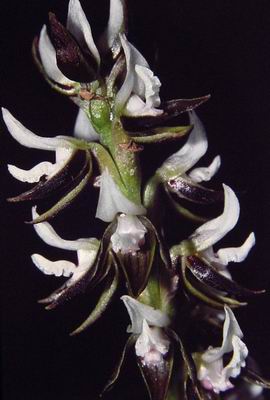
Pterostylis vittata var subdifformis Nicholls. Miss F. Corker, Boyup
Brook, 1930.(No picture)
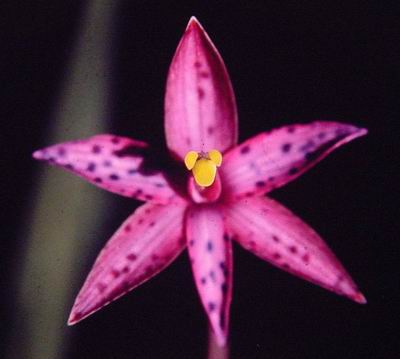
Thelymitra spiralis var pallida Nicholls. ex Mrs. C. Scoulera,
Yarloop, Aug 1948
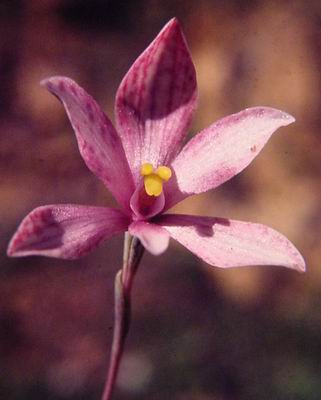
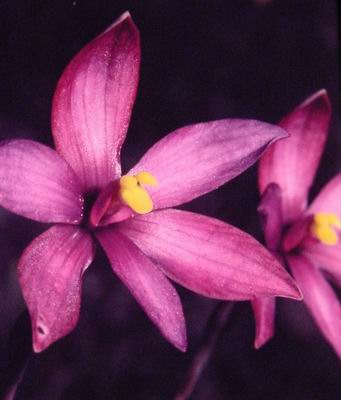
T. spiralis var punctata Nicholls ex Mrs Scoulera, Yarloop August
1948.
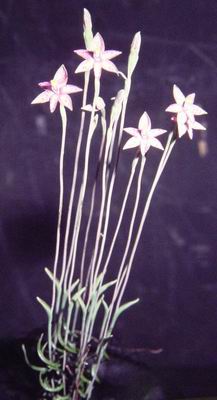
T. spiralis var scoulera Nicholls ex Mrs G Scoulera, Yarloop August
1948.
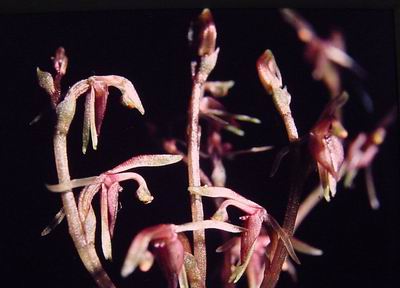
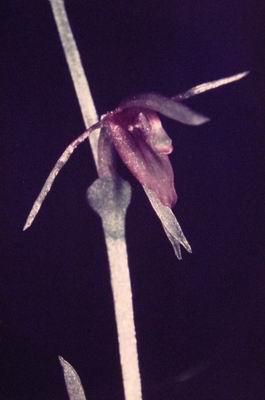
Acianthus tenuissimus Nicholls et Goadby. E.T. Goadby,
Bayswater, Sept/October 1932.
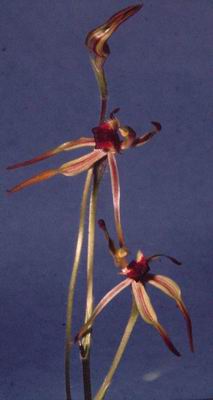
Caladenia ensata (Reduced to a synonym but since re-enstated)
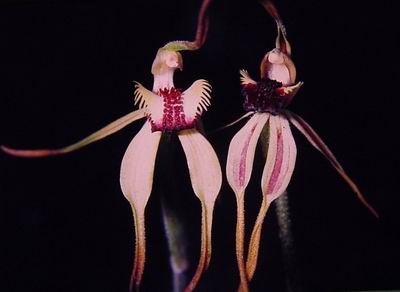
Caladenia ensata
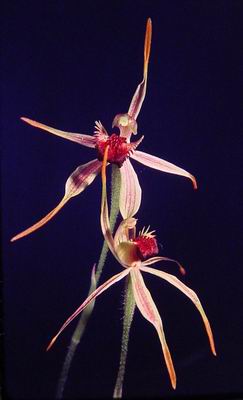
HERMAN M.R. RUPP. 1872-1956. Clergyman and Orchidologist.
The Reverend Rupp was another of the Australian enthusiasts that became
involved with the Orchidaceae in the late 1800's. During an extremely active
life he traveled widely in the eastern states, and corresponded and visited
numerous interested people. His enthusiastic interest resulted in the naming of
some 70 orchids. He published numerous papers the most important being:
Orchids of New South Wales and A Guide to the Orchids of New South Wales as
sections of the Flora of NSW (National Herbarium).
His contribution to the knowledge and taxonomy placed him on an equal
footing in importance to Dr Rogers.
He named one terrestrial from W.A.:
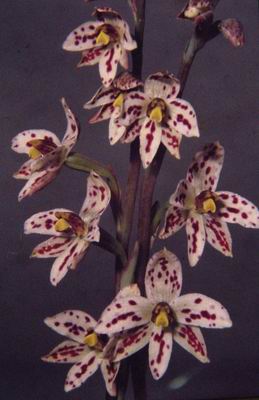
Thelymitra cucullata H.M.R. Rupp. Aust Orch Review 1946 Miss D
Southland, Youngs Siding, W.A. August 1945.
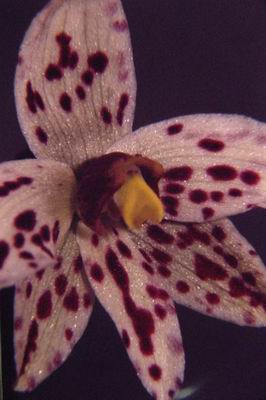
ALEXANDER SEGGER GEORGE (1939 - ) Botanist.
Alex George joined the W.A. Herbarium staff in 1959 and became a senior
botanist. He was one of the very few who had an extensive knowledge and
interest in the Orchidaceae. He also specialized in Verticordia and Banksia has
published more than 50 scientific papers. Has also been author and co-author of
a number of books on general flora and orchids. The most important of these are
"The Banksia " illustrated by Cynthia Rosser.
It was Alex George's continuing interest over a period of years that
eventually contributed to the rediscovery of one of the world's most unique
orchids Rhizanthella gardneri at Munglinup by farmer John McGuiness in
1979.
One of his most important works was the publication of "A Check List Of
The Orchidacea Of Western Australia" in 1971.
In 1981 he took up a position at Canberra as Executive Director of the revision
of The Flora of Australia where he is responsible for co-ordinating the more
than 100 specialized researchers that are contributing throughout
Australia.
He named and described four orchids published in Nuytsia, bulletin of the
Western Australian herbarium Vol. 1 No. 2,1971.
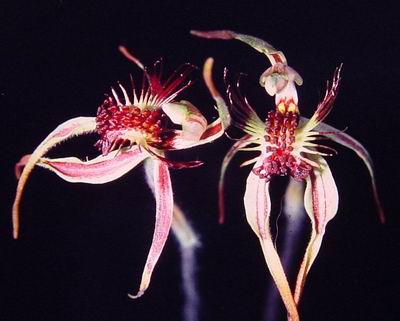
Caladenia corynephora A.S. George, Banks of Donnelly River, Dec 7~
1957.
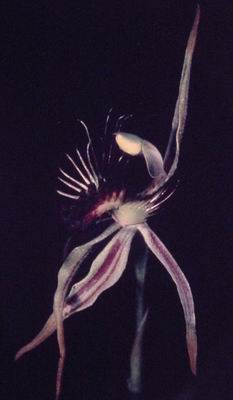
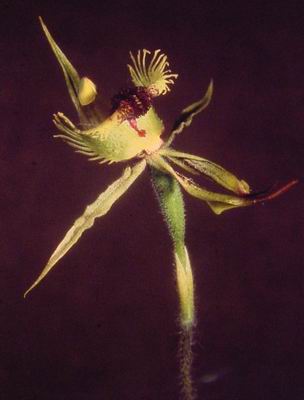
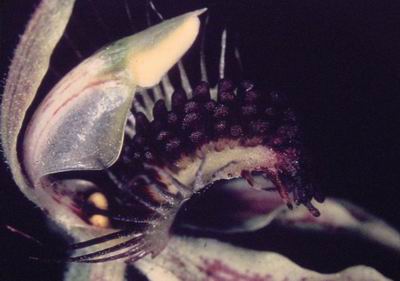
C. crebra A.S. George 1971 Dongara, W.A., A.S. George, Aug 29, 1969.
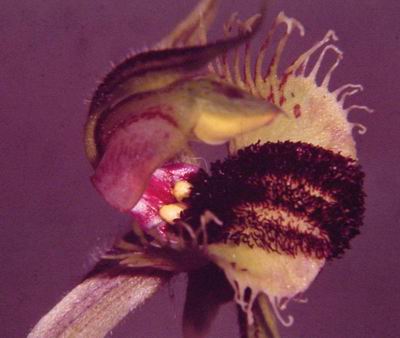
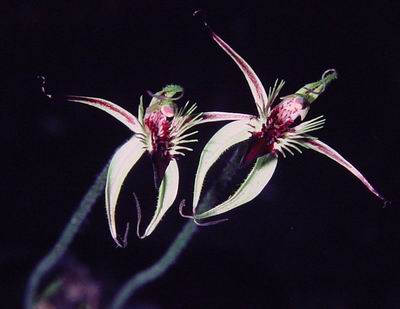
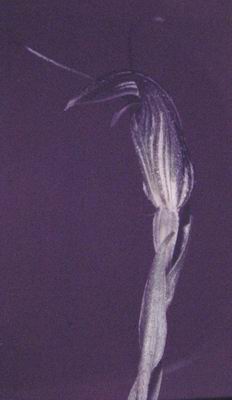
C. graminifolia A.S. George, Culham Inlet W of
Hopetoun, WA., AS. George, Aug 1, 1969.
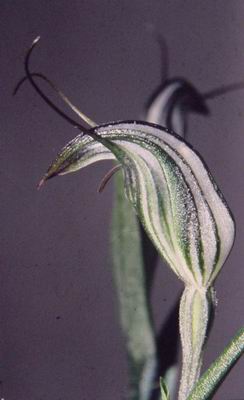
Pterostylis angusta A.S. George, 1971 West of Mt Trio, Stirling
Range, W.A. A.S. George, Aug 2, 1969.
FUTURE DIRECTION
Alex George published 7 new names in 1985. Bob Bates 1, in 1984. Stephen Hopper
after four years of revision of Drakaea and Caladenia has some 30 new species
in Manuscript. Diuris, Pterostylis, Prasophyllum, Thelymitra and minor genera
are currently being revised for inclusion in The Flora of Australia
REFERENCES
Pelloe, Emily H. 1930 West Australian Orchids
Erickson, Rica 1951 Orchids of the West
Erickson, Rica 1969 The Drum'monds of Hawthornden
Hasluck, Alexandra 1955 Portrait with Background-
The Life of Georgiana Molloy
Kerr, Ronald 1964 The Sharp Eyes of Robert Brown
Australian Orchid Review March 1964
Kerr, Ronald 1966 The Tool that Moved the World
Robert Brown. Australian Orchid Review December 1966.
George, Alexander S. 1971 A Check List of the Orchidaceae of
Western Australia. Nuytsia Vol 1. 1, No. 2.
Sharr, F.A. 1978 Western Australian Plant Names and their Meanings.
University of Western Australia Press 1978.
Smith, G.G. 1966 The Early Botanical Explorers. Journal and Proceedings of the
W.A.
Historical Society.
Hoffman, Noel and Brown, Andrew 1984 Orchids of South Western
Australia.
University of W. Australia Press1984.
BACK

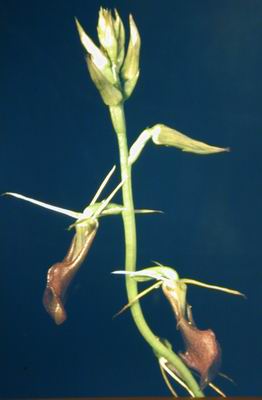 *
Cryptostylis ovata
*
Cryptostylis ovata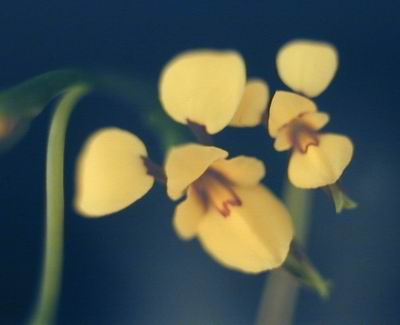
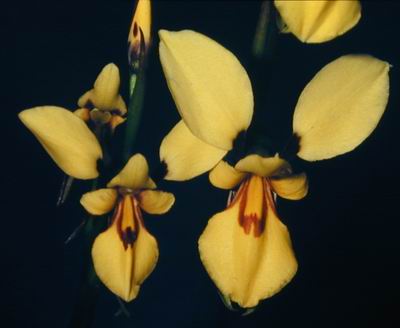
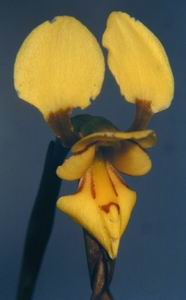 *Diuris setacea