MICROTIS (Mignonette orchids)
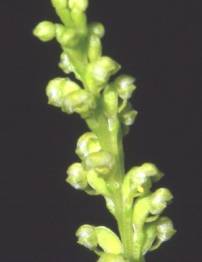
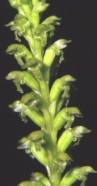
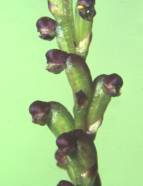
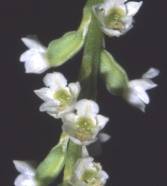
This genus has at least 13 species, all but one occurring in Australia and at least 10 species in West Australia (Hoffman and Brown, 1998). Microtis flowers are very small. Most species grow in or near wetlands.
|
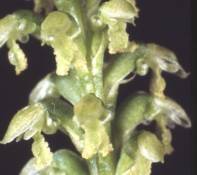
Microtis alba, Lake Seppings, Albany, Nov 1978 |
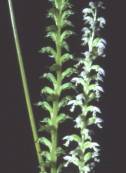
Microtis alba rara, Emu
Point, Albany, Nov 1984 |
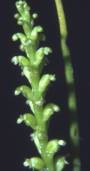
Microtis atrata, Bakers
Junction, Albany, Sep 1982 |
|
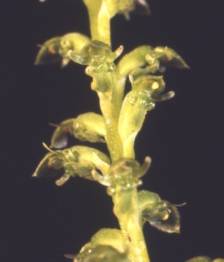
Microtis brownii, Lake
Seppings, Albany, Dec 1975 |
Microtis globula, Bakers
Junction, Albany, Nov 1986 |
|
Microtis media, Lake
Seppings, Albany, Nov 1987 |
Microtis orbicularis,
Gledhow, Albany, Nov 1994 |
Microtis pulchella, Bayonet
Head, Albany, Nov 1986 |
���������������
 ���
���
|
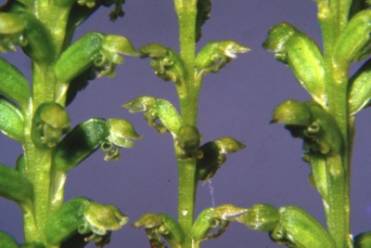
Microtis unifolia, Lake
Seppings, Albany, Nov 1987 |
MONADENIA� (South African orchid)
The genus Monadenia has at
least 20 species, all native to South Africa (Hoffman and Brown, 1998). One
species has become established in West Australia. It was probably introduced
from seed in sacks covering goods unloaded in Albany but has since spread to
Geraldton and Esperance.
|
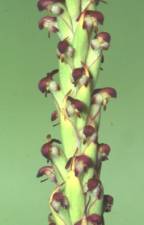
Monadenia bracteata,
Gledhow, Albany, Nov 1992 |
PARACALEANA� (Duck orchids)
Paracaleana is a genus
of at least 9 species, including 8 from West Australia (Hoffman and Brown,
1998). The other species is found in Queensland, New South Wales, Victoria,
South Australia, Tasmania and New Zealand. All species have a labellum which
flicks over when touched, facilitating pollination by insects.
|
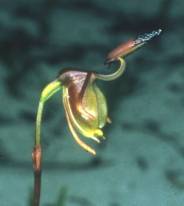
Paracaleana nigrita, Cape Le
Grande, Nov 1979 |
PRAECOXANTHUS (Leafless orchid)
This genus, of one species,
confined to West Australia, was previously included with Caladenia
(Hoffman & Brown, 1998). Flowering plants do not have a leaf but
non-flowering plants have a small, flat, oval-shaped leaf.
|
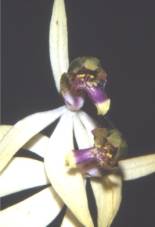
Praecoxanthus aphyllus, Bayonet
Head, Albany, May 1987 |
PRASOPHYLLUM (Leek orchids)
The genus has at least 50 species,
most found only in Australia. There are at least 25 species in West Australia
(Hoffman and Brown, 1998). They are known as leek orchids because of their
hollow, leek like leaf. They range in size from dwarfs up to 15cm tall, to
giants well over 2m, with over 100 flowers.
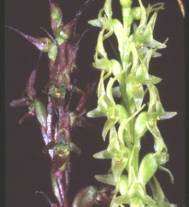
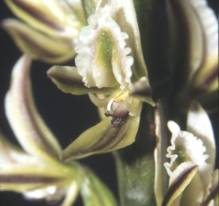
|
Prasophyllum attenuatum, Prasophyllum
macrostachyum,
Tenterden, Rocky Crossing, Sep 1984 |
Prasophyllum brownii, Gull
Rock, Albany, Nov 1998 |
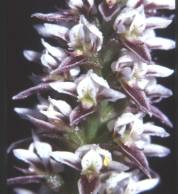
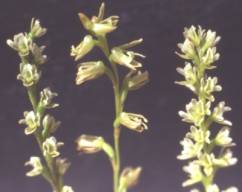
|
Prasophyllum cucullatum, Gull
Rock, Albany, Oct 1985 |
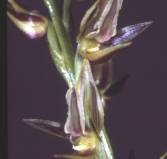
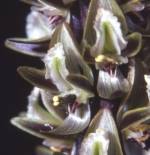
Prasophyllum cyphochilum, Prasophyllum
ovale, Prasophyllum
plumaforme,
Frankland, Oct 1979 |
|
Prasophyllum drummondii,
Frankland, Oct 1976 |
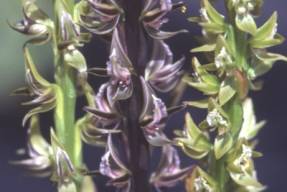
Prasophyllum elatum, Albany,
Oct 1985 |
|
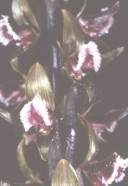
Prasophyllum elatum, Prasophyllum
grimwadeanum, Prasophyllum
regium, Spencer
Park, Albany, Oct 1998 |
Prasophyllum fimbria,
Manypeaks, July 1979 |
|
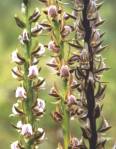
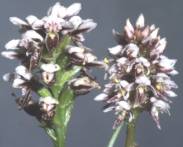
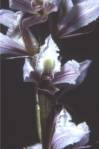
Possible hybrid Prasophyllum fimbria x Prasophyllum
grimwadeanum,
Bunbury, Sep 1985 |
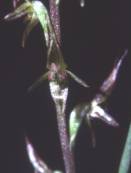
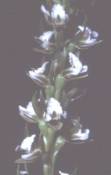
Prasophyllum gibbosum, Bakers
Junction, Albany, October 1986 |
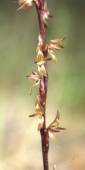
Prasophyllum hians, Gull
Rock, Albany, Oct 1983 |
|
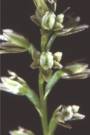
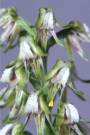
Prasophyllum lanceolatum,
Walpole, Nov 1981 |
Prasophyllum macrostachyum, Sep
1982 |
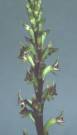
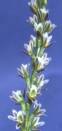
Prasophyllum odoratum, William
Bay, Oct 1984 |
|
Prasophyllum ovale,
Yealering, Sep 1983 |
Prasophyllum parvifolium, Spencer
Park, Albany, Jun 1987 |
Prasophyllum paulinae,
Cuthbert, Albany, Dec 1998 |
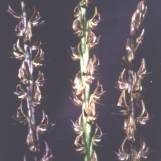
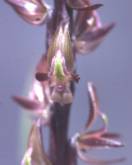
Prasophyllum plumiforme, Lake
Muir, Oct 1991 |
|
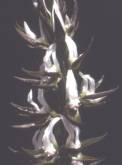
Prasophyllum regium,
Middleton Beach, Albany, Dec 1981 |
Prasophyllum sargentii, Lake
King, Sep 1979 |
Prasophyllum triangulare, Albany,
Oct 1980 |